
At St James's we believe music to be a gift of God and so all music which takes place in our church is offered to God in worship and thanksgiving, with the ministry of music being an extremely important part of our parish’s life, witness and mission. Music plays an important part in the services on Sundays, at festivals and special days during the year and sometimes at weddings and funerals.
Music in church tends to be very visible - certainly audible! What you see and hear during a service though is the tip of quite a large iceberg with nine tenths of the work having already happened in advance, usually weeks or months beforehand.
The Organist & Choir Director
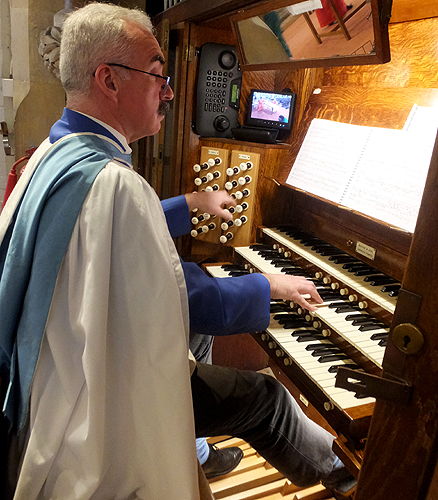
The Organist & Choir Director is Thom Stanbury, appointed in February 2019. Thom says: “My vision is that music can and should be a key element of worship, strengthening and adding resonance and relevance to the work of a parish church."
The Choir
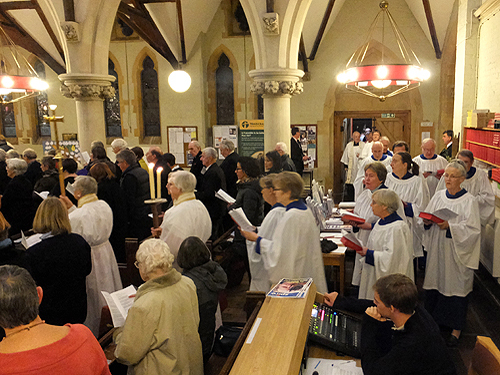
The choir supports the congregation regularly, though not every week, at the Sunday Parish Communion services. In addition to the hymns, it sings at least one anthem, usually during the administration of Holy Communion and occasionally an introit. The choir also leads the singing in the traditional Carol Service and takes part in many special services throughout the year, helping to celebrate Advent, Christmas, Lent, Easter, and other important milestones in the Church Year. There are occasional special Sunday Evensongs.
Generally rehearsals are held in the church on two Friday evenings a month from 7pm to 8pm, more preceding major services, such as those during Holy Week and the Carol Service. There is a mixture of choral and musical levels of experience within the choir. A variety of music is performed, from the Renaissance period onwards. Listen to the choir sing the anthems during a service on YouTube.
The Organ
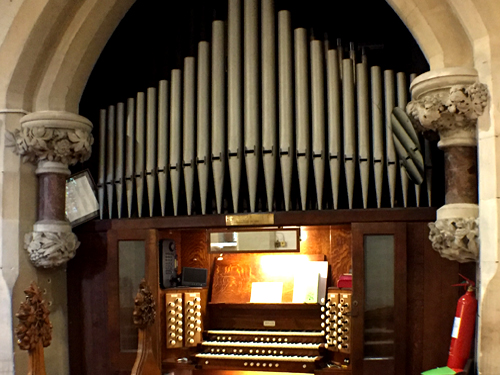
The Organ, originally built by Bishop for St Peter’s, Eaton Square in the 1830s, was bought for £150 by Revd Fitz Wygram in 1874. It has been said that “the organ at St James is one of the finest in the area, is a great asset to the church and one commented on by many visiting musicians”. The organ is now a three manual and pedal organ and contains hundreds of pipes of different sizes. Through the years the organ has undergone many cleanings, repairs, refurbishments, modernisations, additions and improvements.
We also have a boudoir grand piano, a clavinova and a variety of percussion instruments for children.
Concerts & Recitals
Concerts & Recitals are performed in the church by local schools, community organisations and other music-makers. The layout of the church, its fine acoustics and the facilities of the adjacent church hall all make St James's an excellent venue for musical events.
Find out more
Contact
Thom Stanbury (Organist & Choir Director)
 |
 |
 |